
Yash Sheth is the co-founder and COO of Galileo and a recurring co-host of Chain of Thought in the show’s first season. He hosted and co-hosted episodes on agentic architecture, information symmetry in the enterprise, and why AI development needs the kind of evaluation discipline traditional software already has.
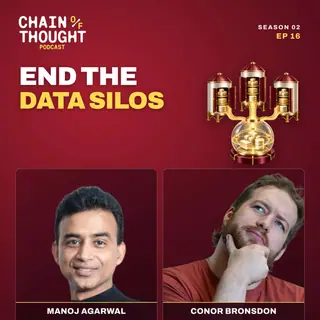
Latest episode with Yash Sheth · EP 16
Information Symmetry: DevRev's Bet on AI-Driven Enterprise Decisions | Manoj Agarwal
Manoj Agarwal & Yash Sheth ·
Episodes
-
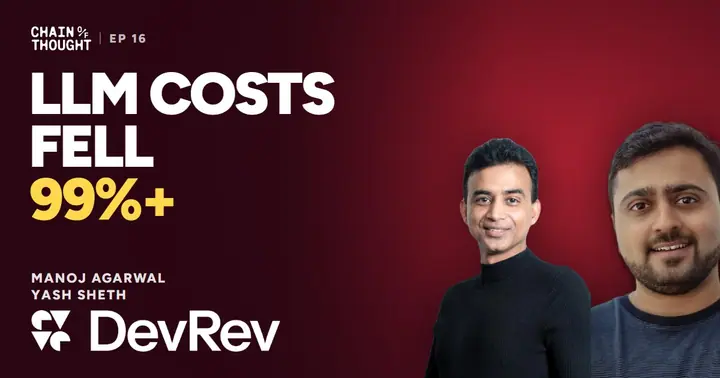
EP 16 · RAG & Retrieval
Information Symmetry: DevRev's Bet on AI-Driven Enterprise Decisions | Manoj Agarwal
-
What the conversations cover
These notes summarize the episodes featuring Yash Sheth, including other speakers in panel conversations. Follow a source link to read the discussion in context.
EP 16 Information Symmetry: DevRev's Bet on AI-Driven Enterprise Decisions | Manoj Agarwal
- Manoj Agarwal frames enterprise dysfunction as an information-symmetry problem: most meetings exist only because attendees hold different data. As he put it, “if the same information was available to every single person in that room, did we even require this meeting to make a decision?” The cost is decisions driven by “the biggest title and loudest voice” because the information they carried was different from everyone else’s. Episode takeaways
- DevRev’s answer, per Manoj, is a business-centric knowledge graph — not a dump where retrieval “magically” works, but a structure built around the only two things he says matter to a company: “the product or services that you provide and the customers you serve.” On top sit a conversational layer and agentic actions that two-way sync back into primary systems via DevRev’s patented Airdrop tech. Episode takeaways
- Manoj’s cost-collapse claim, with his own hedge intact: over “eighteen months” a million tokens went from “dollars 50 down to what? 12¢ or something,” and for advanced models “more than 99% reduction.” His point isn’t the exact figure — it’s that LLM inference is now nearly free, so the real enterprise challenge is uniting private data, not affording compute. Episode takeaways
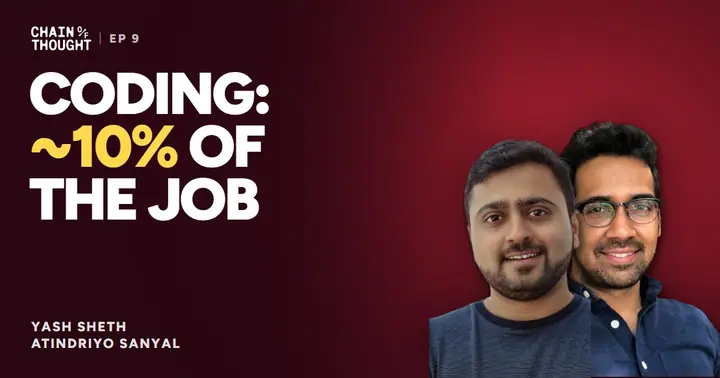
EP 9 AI in 2025: Agents & The Rise of Evaluation-Driven Development | Galileo's Yash Sheth & Atindriyo Sanyal
- Atin Sanyal’s hot take: “in the next three to five years, every piece of software that is built on this planet will have some sort of AI baked into it.” He argues AI software development is “back to square zero” — “there’s no eval tooling,” and people are using “caveman tools” to “just look at vibe checks and eyeballs.” Conor pushes back that it’ll take longer and will owe Atin a meal if that five-year claim is proven right. Episode takeaways
- Yash Sheth’s one-word theme for 2025: “automation.” He argues the real ROI comes not from making software more conversational but from automating workflows across industries — LLMs that make API calls, execute code, and process multi-modal data (images, audio). Episode takeaways
- Atin notes that “25 percent of Google’s code is now code gen automated,” but says under a magnifying glass most of it is boilerplate — “a couple of for loops” and basic things. His excitement for 2025 is moving past boilerplate toward “better code understanding” that grasps the context around the code. Episode takeaways
In their words
How do you see the like DevRev agents communicating with all the other agents and this is actually relevant now because we there's some level of standardization efforts going on in this space. But I'm curious about like how do you see that vision pan out?
 Yash Sheth Information Symmetry: DevRev's Bet on AI-Driven Enterprise Decisions | Manoj Agarwal · 21:10
If one word comes to mind, it's automation. So far, we have been really leveraging this technology to answer questions to, make technology more conversational and, while that has been a great start to adopting language models as part of software, the real ROI is going to come from leveraging this technology to automate so many, so many workflows out there across industries.
Yash Sheth AI in 2025: Agents & The Rise of Evaluation-Driven Development | Galileo's Yash Sheth & Atindriyo Sanyal · 2:00 Transcript excerpts; ellipses mark omitted words. Some automatically selected quotes have filler words removed.
Related episodes
-
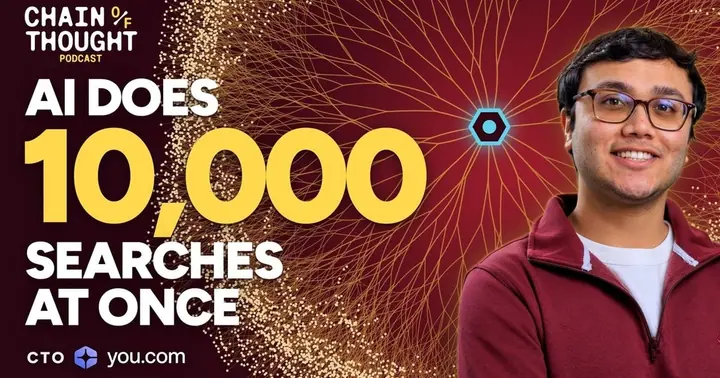
EP 81 · AI Agents
Agents Are Overtaking Humans in Search: Why Search Must Be Rebuilt
Saahil Jain, You.com
-
EP 42 · AI Agents
Architecting AI Agents: The Shift from Models to Systems | Aishwarya Srinivasan
Aishwarya Srinivasan, Fireworks AI
-
EP 5 · AI Agents
Practical Lessons for GenAI Evals | Chip Huyen & Vivienne Zhang
Chip Huyen & Vivienne Zhang
-
EP 82 · AI Agents
Asking Your Team to Automate Their Jobs With AI | Cloudera's Shayde Christian
Shayde Christian, Cloudera