
At the time of the conversation, Logan Kilpatrick was a Senior Product Manager at Google DeepMind. He joined Chain of Thought to tell the creation story of Gemini 2.0, why he sees it as the model to beat, and how its approach to function calling and tool use changes things for developers.
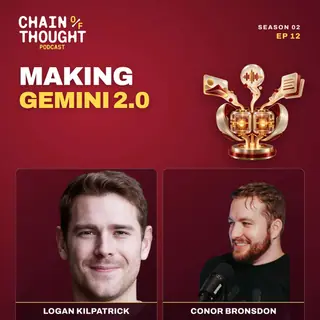
Latest episode with Logan Kilpatrick · EP 12
The Making of Gemini 2.0: DeepMind's Approach to AI Development and Deployment | Logan Kilpatrick
Logan Kilpatrick, Google DeepMind ·
Episodes
-
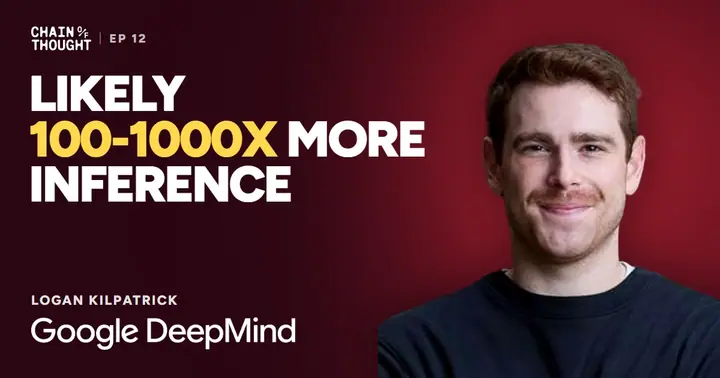
EP 12 · AI Evaluation & Reliability
The Making of Gemini 2.0: DeepMind's Approach to AI Development and Deployment | Logan Kilpatrick
What the conversations cover
These notes summarize the episodes featuring Logan Kilpatrick, including other speakers in panel conversations. Follow a source link to read the discussion in context.
EP 12 The Making of Gemini 2.0: DeepMind's Approach to AI Development and Deployment | Logan Kilpatrick
- Flash-Lite holds the line on price; Pro pushes the frontier. Google kept Flash-Lite at “the same price point that we had with 1.5 flash” specifically to “remove the economic burden” for developers putting AI in front of users — “if cost is the barrier for you to build with AI, like, let’s not have that continue to be the case.” The 2.0 Pro model is a continuation of the December Gemini 1206 model — “one of the highest ranked models for coding use cases” — built to “push the frontier of coding and agents.” Episode takeaways
- Function calling is the foundation of the agentic era. Logan calls tool use “the core enabler of a lot of these agentic workflows” and says the team is “screaming it from the mountaintops internally” that the model has to be great at it. Gemini 2.0 was trained to natively know when to invoke first-party tools — search and code execution — to fix two core LLM limits: no access to “updated world knowledge,” and the “embarrassingly bad mistakes” on problems “you can actually solve with a calculator or by running a little bit of code.” Episode takeaways
- No weird pricing, and compositional function calling ships with 2.0. Search and code execution are free to try and can be scaled to production; for code execution, “you just pay for the tokens that are created” — “there’s, like, no weird pricing story.” Compositional function calling, new in 2.0 and available in the API, lets developers “describe the sequence and the chain” of functions, because the order in which tools are called “actually matters a lot.” Episode takeaways
In their words
I don't have time to read through all this stuff. But for people who want to, I think about girlfriend. We spend a ton of time looking at all the options of everything that we might do, whether it's going to dinner or going on a trip somewhere. And to sort of take away that burden and just like get access to that information, I think is going to be a really, it's going to be such a powerful product experience.
 Logan Kilpatrick The Making of Gemini 2.0: DeepMind's Approach to AI Development and Deployment | Logan Kilpatrick · 29:39
Transcript excerpts; ellipses mark omitted words. Some automatically selected quotes have filler words removed.
Related episodes
-
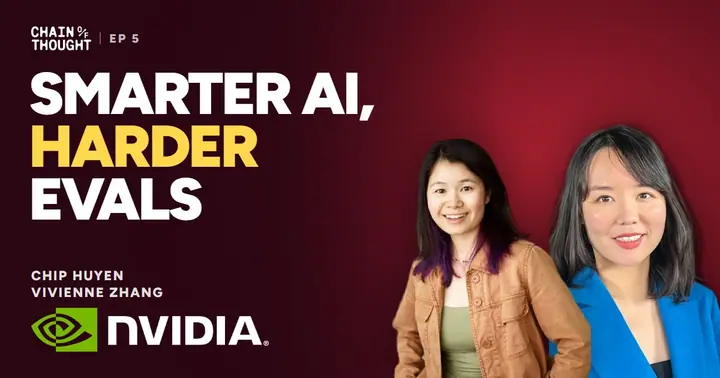
EP 5 · AI Agents
Practical Lessons for GenAI Evals | Chip Huyen & Vivienne Zhang
Chip Huyen & Vivienne Zhang
-
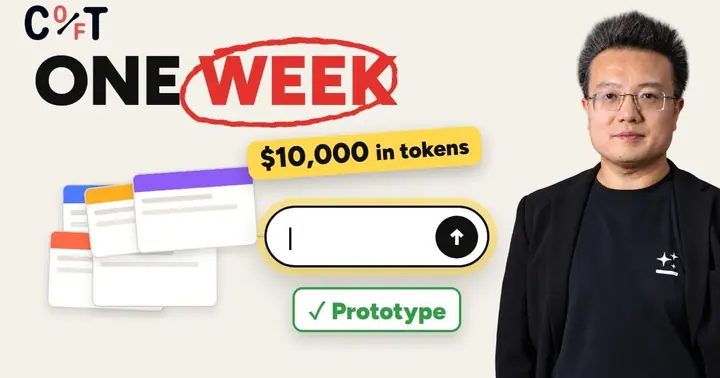
EP 73 · AI Agents
Genspark's Bet: AI Agents Become the Users of Software | Wen Sang
Wen Sang, Genspark
-
EP 57 · AI Agents
Every AI Agent Has an Evaluation Gap | Alex Ratner, Snorkel AI
Alex Ratner, Snorkel AI
-
EP 54 · AI Evaluation & Reliability
Why LLMs Are Plausibility Engines, Not Truth Engines | Dan Klein, Scaled Cognition
Dan Klein, Scaled Cognition