Kimberly Logan
- 1 episode on Chain of Thought
- 2 topics covered
- 1 full transcript
- Oct 2026 first on the show

Kimberly Logan is head of product at the Walrus Foundation, where she builds Walrus Memory, after almost 20 years in traditional software, including seven at Google. On Chain of Thought she explained why agent memory has to stay portable when you switch models or harnesses, and how attestations on the blockchain let you show what happened to your data.
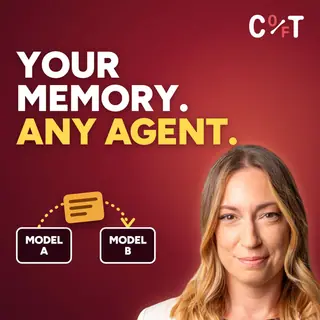
Latest episode with Kimberly Logan · EP 77
Switching Models Shouldn't Mean Starting Over | Walrus Protocol's Kimberly Logan
Kimberly Logan, Walrus Protocol ·
Episodes

What the conversations cover
These notes summarize the episodes featuring Kimberly Logan, including other speakers in panel conversations. Follow a source link to read the discussion in context.
EP 77 Switching Models Shouldn't Mean Starting Over | Walrus Protocol's Kimberly Logan
- Kimberly Logan, head of product at the Walrus Foundation, says longer context windows don’t solve lock-in, because they only help while you stay with that provider. “Those million tokens are gonna get you pretty far. But if I decide I wanna switch models, for any type of reason, or try a different type of harness, I shouldn’t have to start over.” Walrus heard the same from its builders, users and partners, and built Walrus Memory on its decentralized storage protocol so people can carry their agents’ memories with them. Episode takeaways
- An import function doesn’t fix lock-in either, Logan says, because it is “a point in time solution. That is not how real workflows happen.” People use different models for different use cases, as she does in her own day to day, and want to embed Walrus Memory in their own products and agents “so that no one has to choose. And where they start doesn’t need to be where they end.” Episode takeaways
- Logan doesn’t position Walrus Memory against memory products such as Mem0 or LangMem, the two Conor named, and doesn’t publicly benchmark it against them. She sees the opportunity as bigger than memory: helping people own, use and share their data, and letting companies verify that data across company boundaries. Per Walrus, switching coding agents is only maybe 30% of usage; people also build long-running study aids, trading agents that build portfolios, and security workflows that compare production snapshots. Episode takeaways
In their words
Almost 85% of memories that get written Are accessing read back over 30 days later. But if I decide I wanna switch models, for any type of reason. or try a different type of Harness I shouldn't have to start over. that no one has to choose. And where they start doesn't need to be where they end.
 Kimberly Logan Switching Models Shouldn't Mean Starting Over | Walrus Protocol's Kimberly Logan · 0:00
Transcript excerpts; ellipses mark omitted words. Some automatically selected quotes have filler words removed.
Related episodes
-
EP 81 · AI Agents
Agents Are Overtaking Humans in Search: Why Search Must Be Rebuilt
Saahil Jain, You.com
-
EP 80 · AI Agents
How Cisco Secures Personal AI Assistants for 90,000 Employees | DJ Sampath
DJ Sampath, Cisco
-
EP 79 · AI Agents
For AI Agent Fleets, the Model Is Rarely the Bottleneck | Theory Ventures' Andy Triedman
Andy Triedman, Theory Ventures
-
EP 75 · AI Agents
Why Context Alone Isn't Enough for Enterprise AI Agents | WisdomAI CPO Kapil Chhabra
Kapil Chhabra, WisdomAI