When a customer pays, Stripe can send a webhook to your server: an HTTP POST with the payment details. Your code receives it and updates the order. The alternative is polling, asking the API “anything new?” every few seconds, which is slower and wasteful.
Receiving webhooks safely takes some care. Anyone can send a request to a public URL, so receivers verify a signature before trusting the payload. Deliveries can fail or arrive twice, so senders retry and receivers make handlers idempotent, meaning a repeated event doesn’t double-charge or double-ship. For agents, webhooks are a natural trigger: an incoming event such as a new support ticket or a finished build can start or resume a long-running agent without anyone watching a screen.
In episode 78 at 2:29, Svix CEO Tom Hacohen says that before the Standard Webhooks effort you couldn’t find two identical webhook implementations in the wild, and that narrowing that variation made integrations easier. Svix builds webhook infrastructure, helped create Standard Webhooks, and sponsors Season 4 of the show; Conor thanks the Svix team for sponsoring the season at 1:56.
Hear it from the guest
“Like, literally, I don't think you could have found two identical implementations of webhooks in the wild. And just by reducing that space, I think we made integrations easier again.”
Quotes lightly edited to remove filler words.
Sources
- GitHub Docs: About webhooks — GitHub's documentation on webhooks: subscribe to events and GitHub sends an HTTP request with a payload to a registered URL, as an alternative to polling the API; checked October 24, 2026.
- Standard Webhooks specification — An open specification co-created by Svix and industry partners, covering payload format, signatures for verification and retry behavior; checked October 25, 2026.
From the conversation
-
 What Breaks When Agents Become the Customer | Svix CEO Tom Hacohen
-
 Tuning GPU Performance with AI Agents | AMD’s Anush Elangovan on ROCm 10
-
 Thomson 1: The New $40M Legal AI Model | Thomson Reuters Joel Hron
-
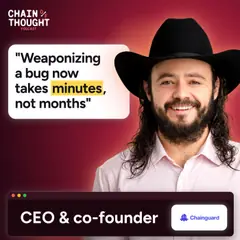 Time to Exploit is Negative: AI Broke the Patch Cycle | Dan Lorenc, Chainguard
-
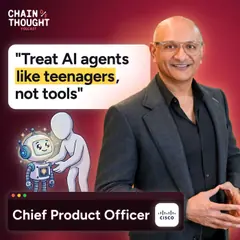 Parenting Your AI Agents for Best Results | Cisco's Jeetu Patel
-
 Your Best AI Engineer Might Have the Worst Metrics | Sonar CTO Andrea Malagodi
-
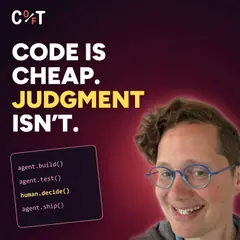 AI Codes: Product Engineers Decide What to Build | Laurie Voss, Arize
-
 Genspark's Bet: AI Agents Become the Users of Software | Wen Sang