Open-Source Model
Under the Open Source Initiative’s Open Source AI (artificial intelligence) Definition 1.0, an open-source model release supplies the materials and rights needed to use, study, modify and share it. Public weights alone are insufficient: requirements also cover code and information about the training data.
Imagine a team assessing a speech-model release. It checks the parameter files, the code used to train and run the system, information about the training data and the terms applying to those materials. A repository labeled “open” is the start of that inspection, not the conclusion.
The Open Source Initiative’s AI Definition 1.0 requires data information sufficient for a skilled person to build a substantially equivalent system, alongside relevant code and parameters. It does not require every training example to be publicly downloadable. Enough data information and an unrestricted right to use available materials are different from a promise of exact reproducibility.
The distinction matters for what a team can inspect and change. An open-weights release can permit local inference without meeting the full AI definition. Terminology varies across releases, so state the definition being used and inspect the actual bundle. Openness also does not certify task quality or remove the need to evaluate a deployment.
Sources
- Open Source Initiative: Open Source AI Definition 1.0 — Specifies freedoms and required data information, code and parameters; raw training data is not universally required.
Go deeper
- Should you use open source or proprietary LLMs? AI, decoded · Open vs. Proprietary AI Models: When to Use Which
- Can switching to an open model actually cut your AI costs? AI, decoded · When an Open Model Beats a Frontier API on Cost
- Open Source Initiative: Open Source AI FAQs docs
Read the rationale for data-information requirements and how they differ from raw-data access.
From the conversation
-
 Thomson 1: The New $40M Legal AI Model | Thomson Reuters Joel Hron
 -
 Architecting AI Agents: The Shift from Models to Systems | Aishwarya Srinivasan
 -
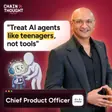 Parenting Your AI Agents for Best Results | Cisco's Jeetu Patel
 - Why Enterprises Need a Different Approach to AI Agents | Lyzr’s Siva Surendira
- The Enterprise AI Deployment Playbook | ServiceTitan, Indeed & Twilio
- GenAI Predictions for 2025 | Databricks & Cohere
- The State of AI: Open-Source Models & Enterprise Trust | May Habib