Model Context Protocol (MCP)
The Model Context Protocol (MCP) is an open standard for connecting AI models to tools and data sources. It defines one common interface — like a USB-C port for AI — so any MCP-compatible model can use any MCP-compatible tool without custom integration code for each pairing.
Also known as: MCP
Before MCP, wiring a model to each tool, file store, or API meant a bespoke integration — and doing it again for the next model. MCP standardizes that connection: a tool exposes itself as an MCP server once, and any MCP-aware client (an IDE, a chat app, an agent) can use it. The common analogy is a USB-C port for AI — one plug instead of a drawer of adapters.
The payoff is composability at scale. Tool use is what lets a model act; MCP is what lets those tools be shared across an organization without re-integrating them per app or per model. That’s why it spread fast in agent platforms — Block’s rollout of agents to 12,000 employees leaned on MCP, which we dug into on the show. The trade-off to watch is governance: a universal connector to your systems is also a surface that needs permissioning and auditing.
Go deeper
- What can MCP actually do? AI, decoded · 3 Things MCP Unlocks That a Chatbot Can't
- Should you use MCP or build a custom integration to connect AI to your tools? AI, decoded · MCP vs. Custom Integration: How to Connect AI to Your Tools
- Do you have to centralize your data before AI agents can use it? AI, decoded · Centralizing Data Before AI: Why the Lake Doesn't Save You
From the conversation
-
 How Block Deployed AI Agents to 12,000 Employees in 8 Weeks w/ MCP | Angie Jones
 - Context Poisoning is Killing Your AI Agents: How to Stop it | Michel Tricot, Airbyte
-
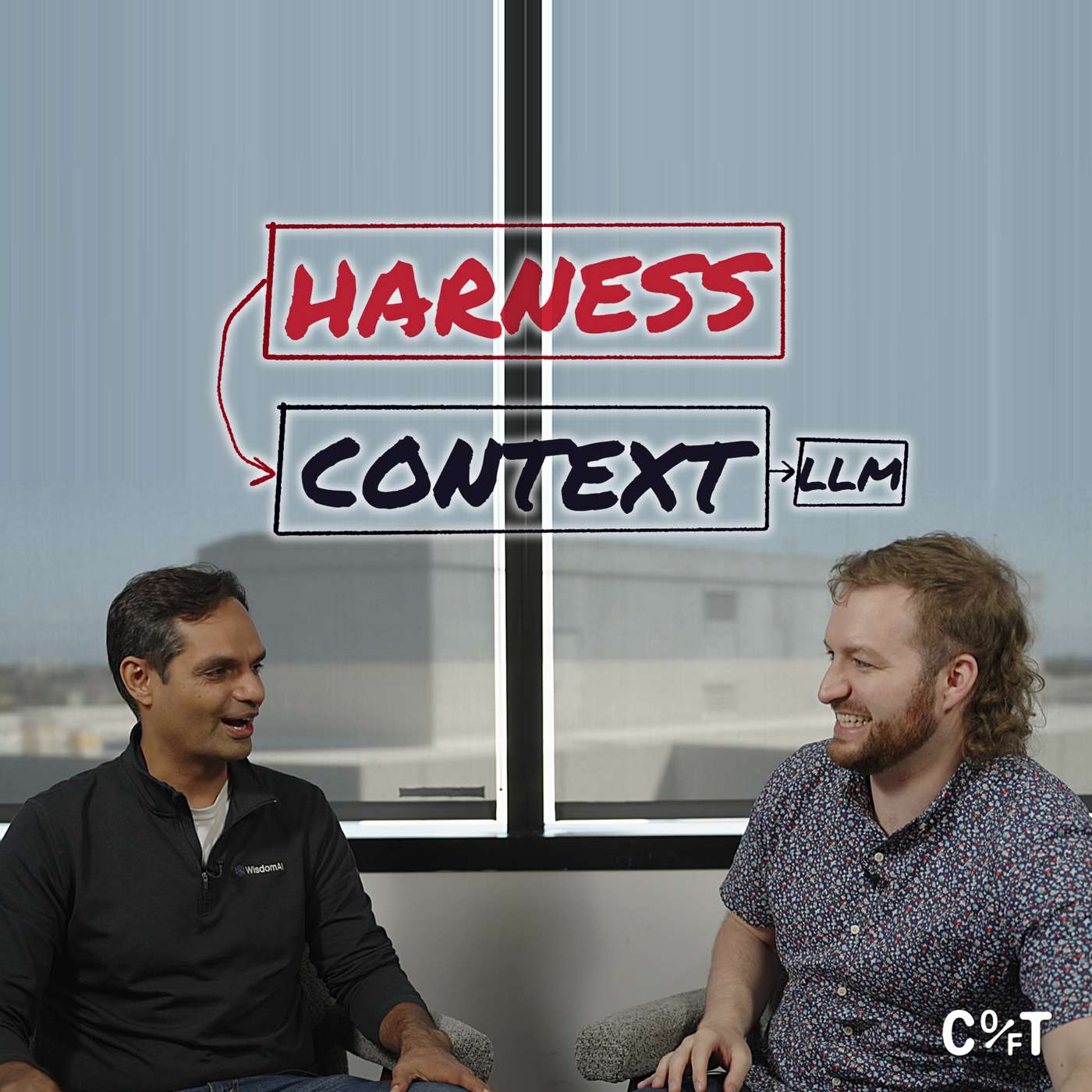 Why Context Alone Isn't Enough for Enterprise AI Agents | WisdomAI CPO Kapil Chhabra
 - Architecting Reliable Agentic AI | Cisco’s Giovanna Carofiglio on the AGNTCY Collective
-
 Data Federation, Not Centralization, Is What Enterprise AI Needs | Jitender Aswani, Starburst
 - I Built an AI Coworker That Runs 90% of My Day | Sterling Chin, Postman
- From Demo to Defensibility: How to Build an AI Business that Lasts | Aurimas Griciūnas
- AMD's Challenge to NVIDIA: The Open Ecosystem Bet | Anush Elangovan & Sharon Zhou