Autocomplete suggests the next line while you type. A chat assistant writes a snippet you copy into your editor. A coding agent takes the task itself. Give it “the signup form accepts invalid email addresses” and it can search the repository for the form, change the validation, run the test suite, read the failure, fix its own mistake and open a pull request for review. Each step is a tool call inside an agent loop; the model decides what to look at or run next from what the last step returned.
What separates a capable coding agent from a weak one is often the environment as much as the model. The SWE-agent researchers found that the commands and file views an agent is given change how well it solves real issues. That surrounding software is the agent harness. Tests and checks matter for the same reason: an agent that can run them gets feedback, and one that can’t is guessing. When nobody reads the code it writes, those checks become the quality gate, which is the bet behind a software factory. Prompting a model and steering only by results, without reading the code, is vibe coding; a coding agent is the tool, and vibe coding is one way to use it.
Coding agents come up on 26 published Chain of Thought episodes. In episode 71 at 5:43, Slack’s Jaime DeLanghe says coding agents are now “so much more like a teammate”: engineers chunk work into discrete tasks and send agents off to do it. Episode 71 credits Walrus Memory and Svix as Season 4 presenting sponsors in its opening read. In episode 61 at 30:22, LlamaIndex’s Jerry Liu calls coding agents a “proxy for computer use”: writing code and shell commands lets them operate many other interfaces. He also says he isn’t convinced that file systems plus coding agents will still be the frontier in a year or two.
The limits are real. In episode 57 at 6:05, Snorkel AI’s Alex Ratner notes that models crush coding competition problems, yet a coding agent can fall down on a mundane task with messier inputs and a longer set of steps. Galileo sponsored episode 57. In episode 63 at 9:59, Yutori’s Dhruv Batra agrees coding agents can handle infrastructure and library changes, but argues that some resistance is organizational, and “coding agents don’t solve that” (11:18). These are the guests’ views. The practical takeaway is ours: judge a coding agent by whether its changes pass your checks and survive review, not by how much code it writes.
Hear it from the guest
“Coding agents themselves are just so much more capable. They're so much more like a teammate.”
“Coding agents are proxy for computer use”
“You can ask a coding agent to do a much more mundane-seeming task”
“Some change in agentification will be driven by access to coding agents”
Quotes lightly edited to remove filler words.
Sources
- Claude Code overview — Anthropic describes Claude Code as an agentic coding tool that reads your codebase, edits files, runs commands and integrates with development tools; checked October 24, 2026.
- Yang et al.: SWE-agent: Agent-Computer Interfaces Enable Automated Software Engineering (2024) — Research system in which a language-model agent creates and edits code files, navigates repositories and runs tests; finds that the interface given to the agent changes its performance; checked October 24, 2026.
- Jimenez et al.: SWE-bench: Can Language Models Resolve Real-World GitHub Issues? (2023) — Benchmark of 2,294 real GitHub issues in which a model must edit a codebase to resolve the issue, often across several files; checked October 24, 2026.
Go deeper
From the conversation
-
 Slack Wants to Be the Context Harness for Code | CPO Jaime DeLanghe
-
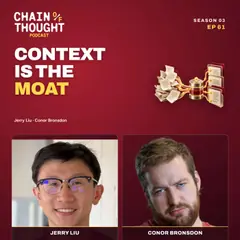 The AI Framework Era Is Over: Why Context Is the Moat | Jerry Liu of LlamaIndex
-
 Every AI Agent Has an Evaluation Gap | Alex Ratner, Snorkel AI
-
 Most of the Web Will Never Get APIs for AI Agents | Dhruv Batra, Yutori
-
 Switching Models Shouldn't Mean Starting Over | Walrus Protocol's Kimberly Logan
-
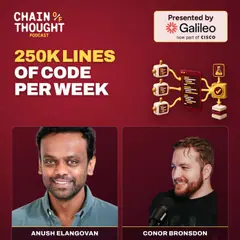 250,000 Lines of Code/Week: Inside an AMD VP's Agent-First Workflow | Anush Elangovan
-
 Building an AI-Native Startup | GrowthX's Marcel Santilli
-
 Why Context Alone Isn't Enough for Enterprise AI Agents | WisdomAI CPO Kapil Chhabra