A simple example: a company trains a resume-screening model on ten years of past hiring decisions. If those decisions favored certain schools, names or career paths, the model can learn the same preference and apply it to thousands of new applicants at once, quickly and without anyone noticing.
The word “bias” has more than one meaning in machine learning, which causes confusion. Statisticians use it for an estimate that is consistently off. Model builders use “inductive bias” for the assumptions a model is built with. In governance discussions it usually means harmful bias: outcomes that are unfair to people. NIST’s guidance points out that bias comes from data, from the way systems are designed and measured, and from the people and institutions that use them, so cleaning a dataset alone rarely fixes it.
Why it matters
Biased systems can deny people jobs, loans or care, and they can expose a company to legal and reputational risk. Teams usually measure outcomes across groups, review training data, and keep a person accountable for high-stakes decisions.
On the podcast
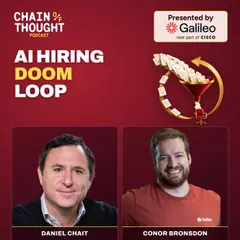
In episode 58, Greenhouse CEO Daniel Chait cites a well-known resume study on callback rates and warns that “if we’re using AI systems to replicate that behavior,” the bias carries into AI too at 40:47. His proposal to rethink job applications altogether is his opinion about hiring design. Galileo was the presenting sponsor of episode 58; the sponsor read is at 2:25.
Related terms
Responsible AI and AI governance cover the programs that test for and manage bias. Model risk management applies similar controls in regulated industries.
Hear it from the guest
“And so we know that that bias exists in people”
Quotes lightly edited to remove filler words.
Sources
- NIST SP 1270: Towards a Standard for Identifying and Managing Bias in Artificial Intelligence — Describes systemic, statistical and human sources of AI bias and argues that bias management must go beyond data and algorithms; checked October 24, 2026.
- NIST AI Risk Management Framework — Lists fairness with harmful bias managed among the characteristics of trustworthy AI; checked October 24, 2026.
- Barocas, Hardt and Narayanan: Fairness and Machine Learning — Open textbook on how machine learning systems can produce discriminatory outcomes and how fairness criteria are defined and measured; checked October 24, 2026.