A training company records an instructor reading for a few minutes, then uses a cloned version of that voice to narrate new course modules in English and Spanish without booking more studio time. That is voice cloning. Older text-to-speech systems offered a handful of stock voices. A cloning system learns what makes one speaker sound like themselves, such as pitch, accent and rhythm, and applies it to new text. Arik et al. showed in 2018 that a few audio samples could be enough, either by fine-tuning a multi-speaker model on them or by turning them into a speaker embedding the model can reuse.
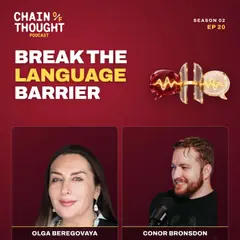
Legitimate uses include dubbing and localization, accessibility for people who are losing their voice, and keeping a consistent brand or narrator voice. In episode 20 at 35:25, Smartling’s Olga Beregovaya lists synthetic voices and, “by consent,” voice cloning among the jobs AI can now do in the translation industry, while stressing the line between that opportunity and ethical AI. Episode 20 aired in season two, which Galileo sponsored.
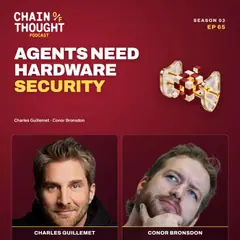
The same capability powers fraud. The FBI’s Internet Crime Complaint Center warns that criminals generate short clips of a loved one’s voice to fake an emergency and ask for money, and impersonate public figures. Conor makes the same point about himself in episode 65 at 48:44: with so many podcast hours online, someone could clone his voice and call his grandmother or his bank. In the US, the FCC ruled in 2024 that robocalls using AI-generated voices count as artificial voices under the Telephone Consumer Protection Act, so they need the called person’s prior express consent unless an emergency purpose or exemption applies.
Practical takeaways (editorial synthesis): get written consent from anyone whose voice you clone and tell listeners when a voice is synthetic. Don’t treat a familiar voice on a call as proof of identity; families and finance teams can agree on a call-back number or code word. A realistic cloned voice of a real person is one kind of deepfake.
Hear it from the guest
“Potentially of course by consent, voice cloning”
Quotes lightly edited to remove filler words.
Sources
- Arik et al.: Neural Voice Cloning with a Few Samples — Baidu research system that clones a voice from a few audio samples, either by fine-tuning a multi-speaker speech model or by inferring a new speaker embedding; checked October 24, 2026.
- FCC: Declaratory Ruling on AI-generated voices in robocalls (FCC 24-17) — February 2024 ruling that AI technologies such as voice cloning fall under the US Telephone Consumer Protection Act's limits on artificial or prerecorded voices, so such calls need the called party's prior express consent unless an emergency purpose or exemption applies; checked October 24, 2026.
- FBI IC3: Criminals use generative AI to facilitate financial fraud — December 2024 public service announcement describing criminals using AI-generated audio, or vocal cloning, to impersonate relatives in a crisis and public figures to obtain payments; checked October 24, 2026.