An ordinary bit is either 0 or 1. A qubit can be in a combination of both, and qubits can be linked so their states depend on each other. Algorithms that exploit those effects can, for some specific problems, find answers in far fewer steps than any known method on a normal computer. Simulating chemistry and materials is the most cited example; others are certain optimization problems and breaking some of today’s encryption.
That last point is why security teams care now. A large, reliable quantum computer could break the public-key encryption that protects much of the internet. No such machine exists yet, but data stolen today could be decrypted later, so NIST published its first post-quantum encryption standards in August 2024 and urges organizations to start switching.
The link to AI is mostly indirect today. Mainstream models train on GPUs and ASICs, and current quantum hardware has too few reliable qubits to compete on that kind of work. Research exists in both directions, quantum methods for machine learning and machine learning that helps control and correct quantum hardware, but treat claims that quantum computers will soon power AI models as speculation. Do not confuse it with quantization, which shrinks AI models and has nothing to do with quantum physics.
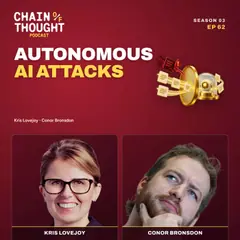
In episode 62 at 38:35, Kris Lovejoy predicts “a lot more discussion about quantum and the potential risk and opportunity associated with quantum technology,” alongside AI and robotics, as converging risks for businesses and governments. That is her forecast.
Hear it from the guest
“We're going to see a lot more discussion about quantum and the potential risk and opportunity associated with quantum technology”
Quotes lightly edited to remove filler words.
Sources
- IBM Think: What is quantum computing? — Defines quantum computing as an emergent field of computer science and engineering that uses quantum mechanics to solve problems beyond the ability of the most powerful classical computers; checked October 24, 2026.
- NIST: Quantum information science — Describes quantum computers as a new kind of machine that can, in theory, simulate the quantum nature of matter and tackle certain currently unsolvable problems; checked October 24, 2026.
- NIST: First 3 finalized post-quantum encryption standards (August 2024) — Announces FIPS 203, 204 and 205, encryption standards designed to withstand attacks by future quantum computers, and urges organizations to begin migrating; checked October 24, 2026.