Software Engineering is Dead. Long Live Product Engineering
A summary of the essay Conor Bronsdon published on the Chain of Thought newsletter. Read the full essay.
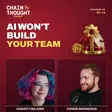
The essay argues that the collapsing cost of writing code is turning software engineers into product engineers. Coding was always a tool for solving problems, a point Charity Majors made in episode 18. As agents take over writing, reviewing and maintaining code, the work left for people is deciding what to build: talking to customers, mapping out features and choosing the context agents need.
The argument draws on episode 74 with Laurie Voss, who co-founded npm and runs developer relations at Arize, and on his essay “We are all Product Engineers now.” His example is a bakery owner who has no interest in learning to write software and only wants something that does what the bakery needs. Many programs could fit a request to keep track of orders, and someone has to find the one that suits a bakery.
Key points
- Voss compares the role to the systems analyst of the 1960s, who translated business requirements into software requirements without writing software.
- One census counts more than 1,300 open forward deployed engineer postings across 565 companies. Voss cites average total compensation around $240,000.
- Voss expects this kind of role to become most of software engineering over the next decade. Conor’s bet is two to five years.
- Junior engineers once learned judgment from having a senior review the code they wrote. Agents now do the writing and the reviewing. The essay advises newcomers to build in public and asks companies to reinvest in apprenticeships.
- Voss likens the moment to the web in 1997: a bubble is coming, the winners are unknown and there is time to retrain.
Disclosure: The newsletter issue was sponsored by G2i. Inngest, Svix, Walrus Memory and G2i sponsor season four, including episode 74 (4:38). Episode 18 aired in season two, which Galileo sponsored while Conor worked there; its show notes carry a Galileo block.
Read the full essay on the newsletter
From the conversations
This essay draws on these episodes — each carries its full transcript.